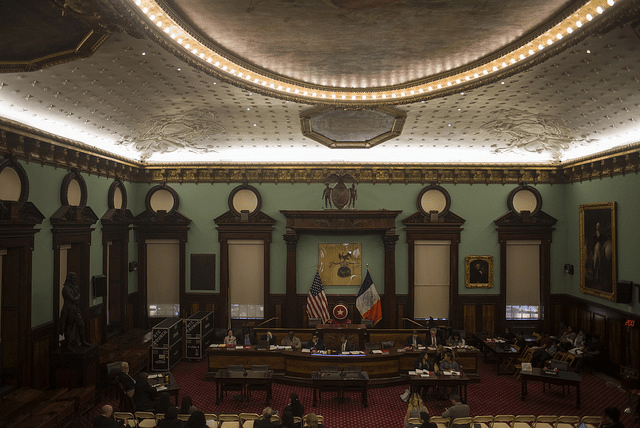
By Michael Phillips | NYBayNews
In a city wrestling with rising costs, widening deficits, and an affordability crisis felt from the Bronx to Bay Ridge, the New York City Council has found one area where belt-tightening apparently doesn’t apply: itself.
The proposed 16% pay raise for council members — boosting salaries from $148,500 to $172,500 — is not simply bad optics. It’s part of a long-running pattern of self-dealing that treats taxpayer dollars as an endless reservoir, even as ordinary New Yorkers face surging rents, shrinking public services, and a fiscal cliff looming over the next administration.
And unlike the working families footing the bill, council members enjoy lavish benefits that would make most private-sector employees blush:
• Zero-premium, zero-deductible health insurance for themselves and their families, worth at least $38,000 a year.
• Taxpayer-funded pensions, boosted by the new salary and exempt from state tax.
• No employee contributions, even as city health care spending has doubled since 2013.
All this for jobs council members routinely describe as “public service.”
A Raise Arriving at the Worst Possible Moment
The council attempted to push the raise through quietly before the end of 2025 — a maneuver the City Charter does not allow. Now, the bill is expected to land on the desk of incoming Mayor Zohran Mamdani in January.
If Mamdani signs it, the message is unmistakable: affordability is for speeches, not for governing.
Because while council members would vault into the top 12% of earners in New York City, thousands of residents are leaving each month in search of lower taxes and safer streets. The city’s projected $7.77 billion budget gap for FY 2025 does not include the additional pension burdens this raise will fuel for decades.
And yes — pensions matter. A council member who serves just one term can walk away with guaranteed retirement benefits that almost no private-sector worker receives anymore. Nationwide, only 1 in 7 private workers still has access to a defined-benefit pension. In New York City government, such perks remain the norm.
“Affordability” for Thee — Not for Me
Councilwoman Nantasha Williams, the bill’s sponsor, argues that members deserve the raise because of their “full-time focus, significant managerial oversight, and constant engagement with complex issues.”
Fine. But private-sector professionals with similar responsibilities pay thousands in premiums and deductibles each year. State legislators — not exactly underpaid themselves — contribute 16% for individual plans and 31% for family plans. MTA workers contribute. Even federal employees contribute.
The only major class of New York public servants that does not contribute to health care?
City elected officials.
If the City Council truly believes in “affordability,” it should start by applying that value to its own workplace.
A Pattern of Self-Interest, Not Service
This raise is not happening in a vacuum. It follows:
• A decade of exploding retiree health costs the city must fully absorb.
• Pressure from public-sector unions to lower retirement ages, which would trigger billions more in unfunded liabilities.
• Increasing service cutbacks every recession cycle — libraries, park maintenance, trash pickup — while political perks remain untouched.
New Yorkers have watched this play out before: government asking families and businesses to sacrifice while electeds take care of themselves first.
And now, the raise has been set up as a political trap for the incoming mayor. If Mamdani signs it, he betrays his affordability platform. If he vetoes it, he risks an immediate war with a council already asserting its dominance.
Either way, New Yorkers lose.
Reforms That Would Restore Trust
If council members are determined to give themselves a raise, they need to offset it with structural reforms. Not symbolic gestures — real change:
- Require council members to contribute to health insurance at state-employee rates (16–31%).
Saves millions instantly and aligns the political class with the workforce it regulates. - End pension accumulation for elected officials.
Public service is not meant to be a lifetime annuity funded by taxpayers. - Shift new members into 401(k)-style plans, like most private employees.
Manhattan CEOs shouldn’t get better retirement plans than the constituents they serve. - Prohibit raises that don’t undergo election-year scrutiny.
No more quiet, off-cycle maneuvering.
Without reforms, the raise only widens the trust deficit between City Hall and the citizens funding it.
The Bottom Line
New Yorkers are not unreasonable. People understand that public servants should be fairly compensated.
What they will not tolerate — and what this raise symbolizes — is a political class insulated from the economic realities it claims to address.
A $24,000 raise is not the problem.
A government that refuses to lead by example is.
As the incoming administration faces historic choices about spending, public safety, and economic recovery, the City Council has made its priorities glaringly clear.
And it didn’t choose you.
 New York Bay News
Leave a comment