By Michael Phillips | NYBayNews
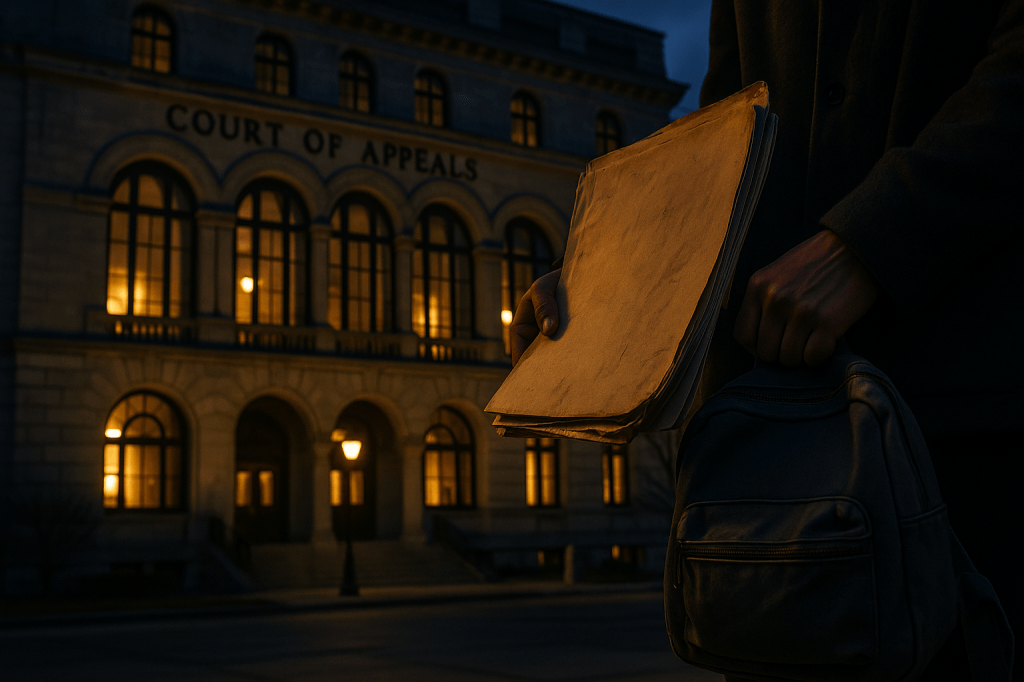
New York’s highest court has delivered a rare and unequivocal message to family courts across the state: if the government is going to permanently take a parent’s child, the Constitution must be followed—every time.
In Matter of Parker J. (Beth F.), decided November 25, 2024 (2024 NY Slip Op 06533), the New York Court of Appeals unanimously overturned the termination of a Syracuse mother’s parental rights after finding that her assigned lawyer gave her virtually no preparation, no guidance, and no meaningful representation. The court held that New York’s statutory right to counsel for indigent parents in termination cases necessarily means the right to effective counsel—not just someone physically present in the courtroom.
It is the first time the Court of Appeals has squarely said so.
And it changes the ground rules for every termination case in the state.
The Case: How a Broken System Failed a Syracuse Mother
The case mirrors reporting originally uncovered by The Imprint: Beth Fisher, a disabled, indigent mother from Syracuse, lost her parental rights in 2023 in a proceeding that lasted only a few hours.
Her court-appointed lawyer:
- Met her for only a few minutes before the hearing.
- Did not explain the stakes or prepare her to testify.
- Told her bluntly she had “no chance of winning.”
Feeling abandoned, Fisher told the judge she would represent herself. The court accepted that at face value—without ensuring she understood what she was giving up.
Her parental rights were terminated the same day.
With pro bono representation from the Hiscock Legal Aid Society, Fisher appealed. The state’s highest court agreed that the process was fundamentally unfair and ordered a new hearing.
Judge Shirley Troutman, writing for the court, stressed that a parent’s right to raise their children is “too precious a right to sever without the meaningful assistance of counsel.”
This is not rhetorical flourish. It is a legal standard the entire state must now follow.
What the Court Actually Held — in Plain English
New York law has guaranteed lawyers for low-income parents in termination cases since 1975. But the Court of Appeals clarified what many judges had been ducking for decades:
1. Assigned counsel must be effective, not symbolic.
A parent is entitled to a lawyer who prepares, consults, investigates, and advocates.
2. Termination is the “civil death penalty.”
When the state seeks to permanently erase a parent from a child’s legal life, constitutional due process applies with full force.
3. If the lawyer is ineffective, the termination can be reversed.
For the first time, New York has tied family-court representation to a standard similar to Strickland v. Washington in criminal cases.
4. Speed cannot justify shortcuts.
Judge Troutman put it bluntly during argument:
“We cannot throw the Constitution in the garbage in order to get there.”
Why This Ruling Matters Far Beyond One Family
This case exposed systemic problems that cut across ideology and geography—problems that affect conservative, moderate, and progressive families alike.
1. New York’s Assigned-Counsel System Is Collapsing
Upstate, most indigent parents are represented by overworked solo practitioners paid as little as $75–$100 per hour, handling well over recommended caseloads.
A 2025 civil-rights review found that high turnover and thin preparation contributed to avoidable removals and wrongful terminations, costing taxpayers tens of millions. New York already spends $1.1 billion annually on foster care and adoption subsidies; inefficiencies in legal representation drive those costs up.
A system this underfunded can’t guarantee fairness.
2. Foster Care Is Extremely Costly — Financially and Socially
Every unnecessary foster placement costs roughly $50,000–$100,000 per child, and children who “age out” face sharply higher risks of homelessness, unemployment, and incarceration.
The Court of Appeals ruling is not “pro-parent” or “anti-CPS.” It is pro-accuracy.
3. Limited Government Requires Due Process
For center-right New Yorkers who value:
- small, accountable government,
- strong families, and
- fiscal responsibility,
this case is a reminder that state overreach thrives where due process is weak.
If the government can take your children without giving you a functioning lawyer, nothing about that resembles limited government.
4. Child Safety Isn’t Undermined by Fair Hearings
Some will claim this ruling slows permanency or keeps kids in limbo.
That’s wrong.
The decision does not:
- require reunification,
- forbid termination, or
- limit judicial discretion.
It simply demands that before the state imposes the “civil death penalty,” the parent gets a fair hearing with competent representation.
That protects children by reducing the risk of reversible errors that destabilize placements years later.
Albany Is Already Moving — But the Reforms Could Die Quietly
The judiciary itself knows the system is breaking.
In its 2025 Legislative Program, the Unified Court System backed A.8272 (Davila), a bill designed to strengthen the right to counsel in child-protective cases by:
- Guaranteeing earlier access to counsel—when CPS first begins investigating, not only after a petition is filed.
- Making pre-petition work compensable, so lawyers no longer have to cut corners to survive financially.
- Standardizing financial-eligibility rules statewide, eliminating county-to-county disparities.
This is exactly the kind of reform the Court of Appeals decision demands.
But as of December 2025, A.8272 is still stuck in the Assembly Children and Families Committee. No hearing. No vote. No funding attached.
Unless the Legislature and Governor put actual dollars behind it in the FY 2026 budget, A.8272 will be yet another Albany press release that never becomes law.
If lawmakers are serious about enforcing Parker J., they must:
- Raise assigned-counsel pay to sustainable levels.
- Cap caseloads.
- Fund A.8272 and move it out of committee.
Otherwise, parents will continue to hear what Beth Fisher’s lawyer told her: “You have no chance.” And in a system built on overwork and underfunding, that will keep being true—not because the facts are hopeless, but because representation is.
What Concerned New Yorkers Should Be Watching
1. The Remand Hearing in Onondaga County
The case is back in Family Court. The record is sealed, but public pressure matters. New York has no oversight mechanism to ensure these remands are meaningfully retried under the new standard.
2. Assigned Counsel Pay and Caseload Reform
Counties are already warning that without higher pay, they cannot fill 18-b panels at all. This affects both parents and children statewide.
3. Training and Accountability for Family Court Judges
Judges now must evaluate whether a parent can meaningfully waive counsel and whether representation is adequate. That requires training and oversight.
4. Transparency in a Closed System
Family court secrecy was designed to protect children. Increasingly, it protects institutional errors. New Yorkers should demand more anonymized decisions, more data, and more oversight.
What This Means for New York Families
For parents:
You are still a citizen. The Constitution still applies to you—even if you are poor, disabled, or battling addiction.
For children:
Your safety matters, and so does the fairness of the process that determines your future.
For taxpayers:
Paying for broken counsel systems costs far more than fixing them.
For anyone who cares about limited government:
Parker J. is a reminder that when government exercises its most extreme power—taking a person’s children—it must be constrained by due process.
This ruling does not weaken child protection. It strengthens the rule of law.
Call to Action
If you believe that family courts must follow the Constitution, do one simple thing:
Email or call your Assembly Member and State Senator and ask:
“Will you support and fund A.8272 in the 2026 budget?”
If Albany fails to act, New York will keep paying—in broken families, in taxpayer money, and in children lost to a system that mistakes speed for justice.
 New York Bay News
Leave a comment