By Michael Phillips | NYBayNews
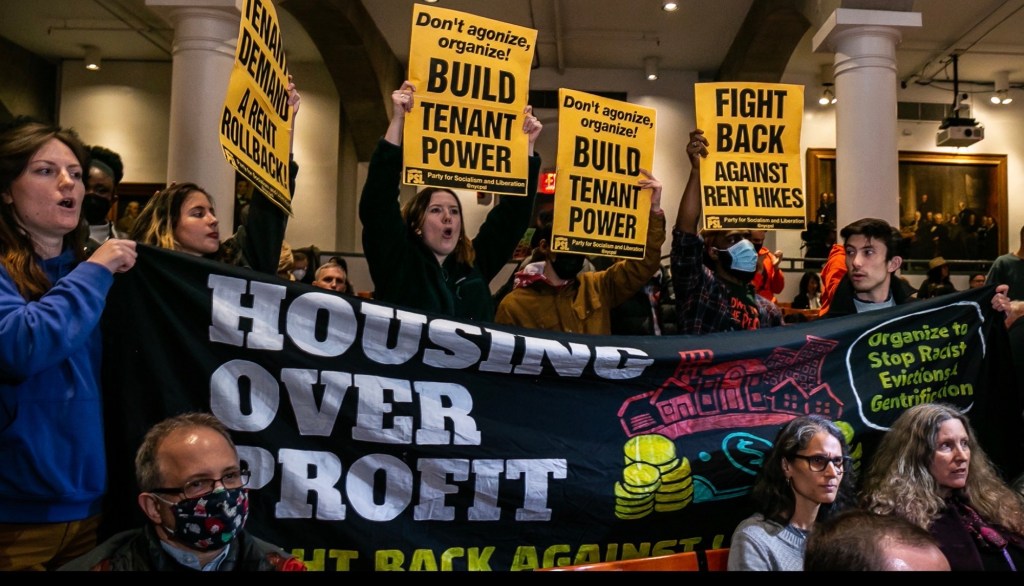
The New York City Council has approved a controversial new housing law that supporters call a safeguard against displacement—and critics warn is another step toward government intrusion into private property markets.
The Community Opportunity to Purchase Act (COPA), formally known as Introduction 902-B, passed the Council on December 18, 2025, by a margin of roughly 31 votes—short of the veto-proof threshold. The bill now sits on the desk of Eric Adams, who has until mid-January to sign it, veto it, or allow it to become law without his signature.
What COPA Actually Does
Despite heated rhetoric online, COPA is narrower than many critics—and some supporters—initially claimed.
The law applies only to “covered properties”, defined primarily as distressed multifamily residential buildings with four or more units. These include properties enrolled in the city’s Alternative Enforcement Program due to severe housing code violations, buildings facing foreclosure, those cited for tenant harassment, or properties with affordability restrictions set to expire within two years.
Under COPA:
- Property owners must notify the city’s Department of Housing Preservation and Development (HPD) before selling.
- HPD-certified nonprofit housing groups receive a limited window—about 25 days—to express interest.
- If interest is shown, nonprofits have roughly 80 additional days to submit an offer.
- Nonprofits must pay market-rate prices, not discounted or forced sale prices.
- Owners may reject nonprofit offers and sell on the open market, though qualified nonprofits receive a short right of first refusal to match third-party offers.
Smaller buildings, owner-occupied properties, most standard multifamily sales, and new construction are excluded—at least initially. The law’s scope could expand later through HPD rulemaking.
Supporters: “A Tool to Preserve Housing”
The bill is sponsored by Council Member Sandy Nurse, who argues COPA helps level the playing field between mission-driven nonprofits and well-capitalized speculative investors.
Supporters—including tenant advocates, community land trusts, and progressive housing groups—say the law will help preserve rent-stabilized and naturally affordable units, reduce displacement, and enable long-term community ownership models such as cooperatives and land trusts.
They often point to similar laws in San Francisco, where a nonprofit-focused COPA program has preserved thousands of housing units without collapsing the broader real estate market.
Critics: “Government Overreach in Disguise”
From a center-right perspective, the concerns are significant.
Real estate organizations such as REBNY, small landlord groups, and free-market analysts argue that COPA interferes with private contracts, delays transactions, and introduces uncertainty that could chill investment—especially in already distressed buildings.
Critics also raise constitutional questions, warning that granting nonprofits a statutory priority in private sales may amount to an improper “taking” or forced interference in commerce. Similar laws in Washington, D.C., under the Tenant Opportunity to Purchase Act (TOPA), have faced decades of criticism for multi-month delays, litigation, and administrative costs, prompting recent reforms to scale them back.
City officials in the Adams administration have publicly called COPA and related measures “shortsighted” and “irresponsible,” arguing they risk worsening the affordability crisis by discouraging maintenance, upgrades, and new investment.
Political Uncertainty Ahead
The bill’s future remains uncertain.
Because the Council vote was not veto-proof, a veto by Mayor Adams would likely kill the measure—especially with a newly seated Council in January 2026. That said, Mayor-elect Zohran Mamdani has expressed support for COPA as part of a broader housing preservation strategy.
If enacted, COPA would not take effect for roughly one year, giving HPD time to finalize rules and certify eligible nonprofits. Legal challenges are widely expected if the law becomes active.
A Broader Debate Over Housing Policy
COPA highlights a growing divide in New York’s housing debate: whether preservation mandates can meaningfully address affordability without undermining supply, investment, and property rights.
Supporters see it as a targeted intervention aimed at the city’s worst buildings. Critics see it as another layer of regulation that prioritizes short-term preservation over long-term growth—at a time when New York is already losing population and struggling to build enough housing.
As Mayor Adams weighs his decision, COPA stands as a test case for how far the city is willing to go in reshaping the real estate market—and how much risk it is prepared to accept in doing so.
 New York Bay News
Leave a comment