By Michael Phillips | NYBayNews
New York City didn’t even have time to shake off the confetti before reporting its first homicide of the new year — a stark reminder that while politicians celebrate “historic progress” in crime reduction, reality hits back without waiting for press conferences.
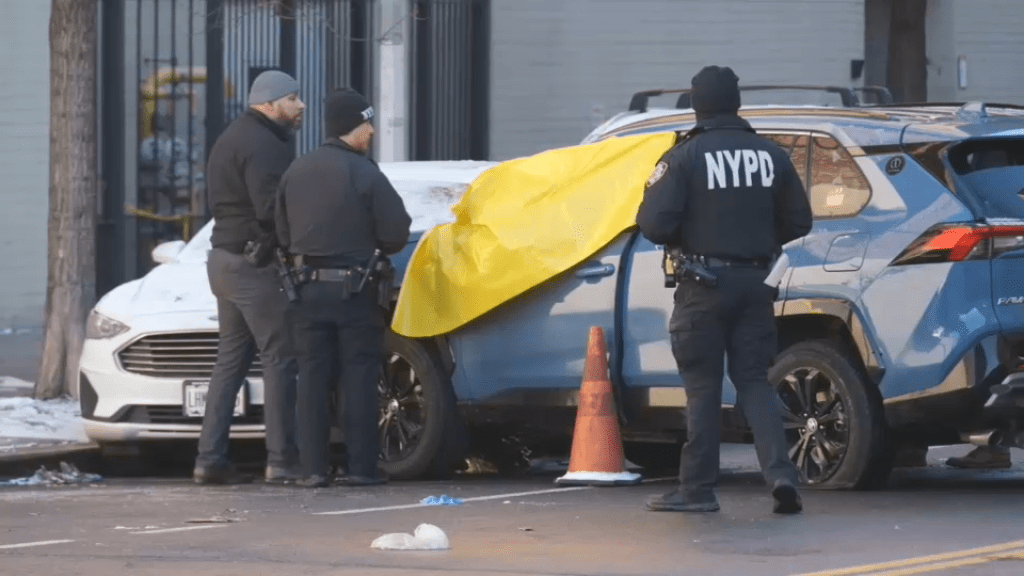
Just before 6:55 a.m. on New Year’s Day, FDNY firefighters responding to a car fire in the Mount Hope section of the Bronx discovered something far more disturbing than a vehicle blaze. Inside the burned blue Toyota SUV, marked with Taxi & Limousine Commission plates, was a 55-year-old rideshare driver — shot twice in the head. He was pronounced dead at the scene. Police have not released his name pending family notification.
The vehicle was found near Morris Avenue by the Cross Bronx Expressway, reportedly parked awkwardly, even sideways, with at least one flat tire in some accounts. Investigators have not confirmed whether the fire was set deliberately to destroy evidence, but few New Yorkers need the dots connected for them.
No arrests have been made. No suspects. No motive. Just silence.
The kind New Yorkers have become far too familiar with.
A Familiar Pattern — And a Harsh Start to 2026
While city and state leaders spent 2025 boasting declining homicide numbers and “safer streets,” a working-class man, out earning a living while most of the city slept, was executed in his vehicle — and burned.
This wasn’t Times Square. Not a headline-ready tourist zone.
Just the Bronx — where crime statistics are too often discussed only when it’s politically useful.
To be clear, no single case defines crime trends. But one case can reveal what remains broken: safety for gig-economy workers, particularly rideshare drivers who are increasingly vulnerable to robbery, carjacking, and unprovoked violence. They drive alone, often late at night, with little protection beyond an app, a phone signal, and hope.
Families rely on these workers. The city relies on them.
But who protects them?
The Broader Conversation City Hall Doesn’t Like Having
A centered view doesn’t shy away from two simultaneous truths:
- Crime has fallen nationally over the past two years.
- New Yorkers still don’t feel safe — especially those who work on the streets.
Perception matters. Quality of life matters. Enforcement matters.
And one murder like this — on Day One of 2026 — can wipe away a year’s worth of polished safety narratives.
Rideshare drivers have repeatedly asked for improved protection measures — from better GPS tracking and mandatory dashcams to faster police response protocols. Yet many feel that policymakers only listen after tragedy, not before.
A Life That Should Have Made it Home
Somewhere today a family woke up to a knock at the door, not a “Happy New Year” phone call.
A man who began 2026 on the job, likely hoping to earn extra holiday fares, never made it back. No speeches or charts will make that reality softer.
New Yorkers deserve transparency, accountability, and urgency — not just slogans.
What Comes Next
The NYPD is investigating, and an autopsy is pending to determine the precise cause of death. Detectives are asking anyone with information or footage to come forward.
But the city should be asking bigger questions too:
- Why do so many New Yorkers still feel unsafe working after dark?
- What protections do gig drivers realistically have?
- How will leaders balance optimism with honesty about violent crime?
One homicide doesn’t define a year — but it sets a tone.
How officials respond will define the rest of it.


Leave a Reply